
Thinking about paying extra money into your mortgage to reduce the balance? It can be a smart move, saving a substantial amount of interest. It can also help you to pay off your home sooner – a dream for many!
But like any financial decision, it’s important to understand how this strategy works. What are the exact benefits of overpaying your mortgage? Do they outweigh potential risks and downsides? Is it the right approach for your situation, or is it better to save the extra money?
In this guide, we break down how mortgage overpayments work and how to apply these extra funds to your home loan. We’ll also discuss pros, cons, suitability, and the terms and conditions to consider.
What Are Mortgage Overpayments?
A mortgage overpayment means paying more than your usual monthly repayment. The extra amount goes straight towards your loan balance, helping to reduce the debt faster and cut the total interest you pay over time. Not every mortgage allows overpayments, and each lender sets its own limits or conditions. Some also charge Early Repayment Charges (ERCs) if you exceed your allowance. Overpayments can be made as one-off lump sums or as regular extra payments alongside your standard instalments.
How Mortgage Overpayments Work
Mortgage overpayments involve paying more than your required monthly loan instalment.
When you make an overpayment, your lender typically applies the extra money directly to your principal loan balance. The reduction in the principal sum lowers the amount of interest on the loan, potentially saving you thousands and reducing your outstanding mortgage balance faster.
Let’s look at an example:
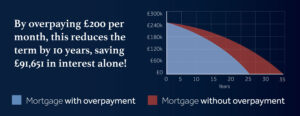
- Initial mortgage: £250,000
- Initial term: 35 years
- Interest rate: 5%
- Overpayment amount: £200
If you consistently pay a regular overpayment of £200 per month above your monthly contractual payment, you could save around £91,651 in interest alone, AND your loan term falls by 10 years!
Of course, savings vary based on the interest rate, mortgage term, and frequency/amount of payments. Your lender or a qualified advisor like Flagstone Financial Management can calculate this precisely for you. Lenders also provide mortgage overpayment calculators to help you do the sums.
Note: Not all mortgages allow overpayments. Rules vary between lenders and different mortgage types (e.g., variable rate, fixed, or tracker deal). There are limits on the amount you can overpay, and fees like Early Repayment Charges (ERC) often apply.
Benefits and Drawbacks of Making Mortgage Overpayments
Overpaying your mortgage undoubtedly brings financial benefits. This is especially true now when interest rates are much higher than a few years ago. However, there are also downsides to consider.
Let’s run through the pros and cons to appreciate all the angles.
The benefits of overpaying your mortgage
- Extra payments shorten your loan term: You’ll be mortgage-free sooner.
- It reduces total interest paid: Less debt means less monthly interest.
- You build equity faster: You own more of your home more quickly.
- Greater financial freedom: Overpaying now frees up future income for goals and dreams.
- Peace of mind: Reducing debt (without affecting your current monthly repayment) often provides a comforting psychological boost.
Downsides to consider when overpaying your mortgage
- Early Repayment Charges: Many lenders penalise overpayments above a certain amount/percentage.
- Sunken funds: Once you pay the money into your mortgage, you may not be able to withdraw it again.
- Other debts may take priority: If you have higher-interest loans, it’s generally wiser to pay them down first (assuming loan agreements permit it).
- Lower liquidity: Paying additional funds to your mortgage means less cash for emergencies, savings, and alternative investment opportunities.
Are There Limits or Fees on Mortgage Overpayments?
There are almost always limits, especially if you are locked into a fixed-rate or tracker mortgage.
Most lenders allow you to overpay up to 10% of your outstanding mortgage balance per year without penalty (some lenders permit up to 20% of your outstanding balance). This is known as your annual overpayment allowance.
If you exceed your overpayment allowance, you usually have to pay an Early Repayment Charge.
To understand how much you can overpay on your mortgage and how penalties might affect you:
- Check your mortgage terms carefully. Pay particular attention to clauses covering early/additional repayments and ERCs.
- Speak with your lender or advisor before making large overpayments.
- Aim to always have a firm handle on your remaining overpayment annual allowance.
When to Consider Making Mortgage Overpayments
Overpayments make the most sense when:
- You don’t have other higher-interest debts. As discussed, it’s financially advantageous to pay off your most expensive debt first.
- Your cash flow is stable and comfortably covering your monthly payment.
- You have a solid emergency fund.
Also consider your long-term goals. Are you saving for retirement? Planning home or energy improvements to enhance your property’s value? Overpaying doesn’t have to be every month. Ideally, you want the flexibility to pay extra when the time is right.
How to Make Overpayments
Making mortgage overpayments is usually straightforward. The process depends on when you plan to credit the funds.
- Set up a standing order to make regular overpayments: This allows you to automatically pay an extra amount on top of your monthly direct debit. You’ll make the same monthly overpayments until you change the arrangement.
- Make a one-off overpayment: You may choose to reduce your capital repayment mortgage with a lump sum payment. This is a popular option after homeowners receive a bonus or inheritance, or sell a valuable asset.
You can apply your overpayment in two ways, be sure to check with your mortgage lender how it is being applied.
- You can apply the overpayment as a lump sum to reduce your outstanding mortgage balance, this will save you more interest in the long term but your monthly repayments will remain unchanged.
- Alternatively, you can use the overpayment funds to lower your regular monthly payments for the rest of your fixed period, which doesn’t save as much interest over the term of the mortgage but reduces your monthly payment.
Is Making Mortgage Overpayments Right for You?
To decide if paying more than your normal mortgage payment is right for you, weigh the savings benefits against your financial needs.
Financial liquidity is important to many households. Ready cash is needed for many reasons:
- Children’s needs
- Medical
- Education
- Car expenses
- Travel
- Variable household expenses.
If you prioritise liquidity, a flexible savings plan might be better than paying into your mortgage account.
An independent mortgage advisor like Flagstone can help you model different scenarios based on your home loan type, interest rate, and financial needs and goals.
Speak to Flagstone About Mortgage Overpayments
Overpaying your mortgage could save you thousands and provide you with financial freedom years earlier than expected.
If you’re considering this option, reach out and speak with a Flagstone advisor for expert guidance tailored to your unique circumstances.
YOUR HOME MAY BE REPOSSESSED IF YOU DO NOT KEEP UP REPAYMENTS ON YOUR MORTGAGE.
Availability will depend on your individual circumstances & credit history. Flagstone will charge a fee for arranging your mortgage, in the region of £299, payable on application.